
AI Is Moving Fast. Your Brand Can’t Afford to Blink.
We all see it and feel it, the AI landscape is evolving at breakneck speed. Anthropic, Google, OpenAI, and Meta are rolling out revolutionary tools that are reshaping how we create, communicate, and connect. For brand and communications leaders, this isn’t a trend to monitor — it’s a strategic shift to navigate. Here’s what’s new and why it matters.
Claude 4 by Anthropic: Research, Writing, and Brand Consistency — at Scale
Anthropic’s Claude 4 is built to handle complex tasks, from research and writing to structured data analysis. One standout feature: Claude can process extremely large inputs (like entire brand guidelines, multi-page reports, or lengthy call transcripts) without losing context. This makes it ideal for automating tasks like drafting content, summarizing sentiment, or generating PR reports that stay aligned with brand voice.
And with features making coding more accessible and Google Workspace integration, Claude can even search your internal docs and the web at once. It’s a communications co-pilot with guardrails. Its “constitutional AI” design minimizes the risk of off-brand or harmful outputs, which is critical in high-stakes messaging.
Google’s AI Blitz: Gemini, Veo, and the Rise of AI Agents
Google’s recent I/O 2025 announcements were a clear signal: they’re building for businesses. The Gemini 2.5 Pro model is excellent at reasoning and coding. With its expanding context window, it can handle big-picture thinking across large documents and datasets.
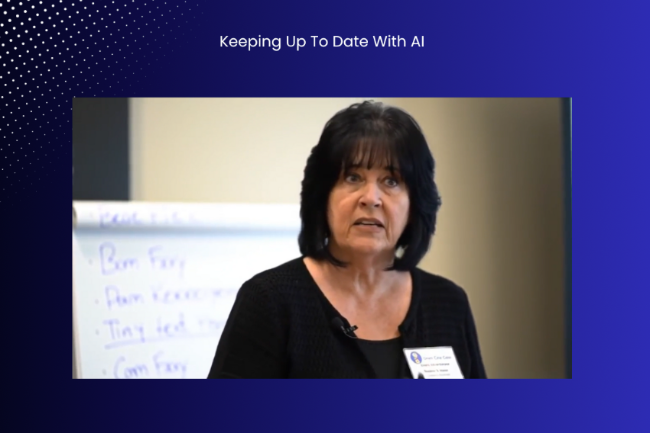
Then there’s Veo 3, which generates full videos with music, dialogue, and motion from a simple prompt. Or Project Mariner, which can automate online research and repetitive web tasks. The Gemini AI Ultra Plan ($249.99/month) unlocks access to tools like Deep Think, designed for solving complex business challenges. I tested Flow with a simple prompt: create a video of a communications leader, someone in her 50s, leading a workshop. Do not include words. Here are two results edited into one video.
For communications teams, this means faster content generation, smarter customer segmentation, and campaign assets (like visuals and summaries) created on demand. But remember: Accuracy still needs a human check.
OpenAI’s Momentum: Visuals, Workflows, and Conversational Search
OpenAI now supports more than 400 million users and continues to integrate AI deeper into work. Its Codex tool helps automate technical workflows, especially for internal platforms or dashboards. But what’s especially relevant for comms: the latest ChatGPT-4o can now create visuals (like charts and infographics) and conduct real-time web searches with linked sources, cutting down time spent researching and designing.
For communications leads, this simplifies tasks like pulling competitive insights, generating branded visuals, or prepping internal reports. But OpenAI’s data retention practices still raise privacy questions. Make sure your use of the tool aligns with internal policies and compliance standards.
Meta’s AI Push: Engagement, Speed, and Control
Meta is embedding AI across Facebook, Instagram, and WhatsApp through Meta AI, built on the open-source Llama 4 model. Tools like AI-suggested replies, image generation, and campaign support are becoming baked into everyday social interactions.
Brands can now quickly localize content, personalize engagement, and create high-volume assets for platforms where audiences already live.
The catch? How much control are you willing to give up? Meta’s tools may boost productivity, but they also raise questions around data ownership, transparency, and ethical training sources. It’s a broader question every comms lead needs to ask about any AI platform: Who controls the data? Who owns the content? And is your organization okay with that?
Why This Matters for Brands and Comms Leads
The AI boom isn’t theoretical, it’s operational. Claude 4 helps automate research-heavy workflows while preserving tone. Google’s tools speed up production and analysis. OpenAI brings together search and visuals in a seamless interface. Meta brings scale and reach through social.
Together, these platforms are redefining how we work and they demand critical thinking. Made up information, weak transparency, and overreliance on automation can lead to missteps if unchecked.
What You Can Do Next
 Experiment Thoughtfully
Try Claude for structured content workflows, Gemini for video, or Meta AI for scalable social but start with low-risk projects.
Prioritize Trust
Use tools with strong safeguards. Claude’s “constitutional AI” framework is one example of AI designed with brand risk in mind.
Stay Informed
Sign up for trusted newsletters. Follow experts like Rebecca Gonzales, Allie Miller and Frank Shaw on LinkedIn. AI changes constantly and your strategy should too.
Audit Every Tool
Review how each provider handles your data. Build policies that keep control in your hands, not the platforms’.
Bottom line
AI is not a future strategy, it’s a current one. The comms teams that engage intentionally, stay curious, and protect trust will define how their brands show up in this AI-driven world.