
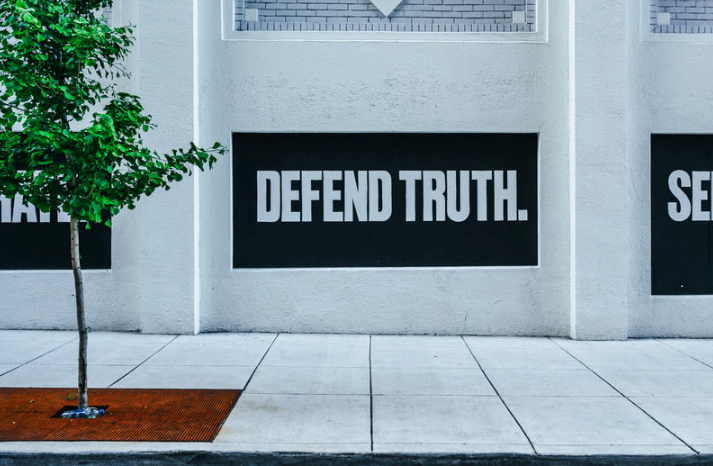
We are no longer living in an information age.
We are living in a verification age. Information is everywhere. Trust is not.
Stop Consuming. Start Triangulating.
In a world shaped by polarization, forming an independent point of view now requires effort. The days of relying on a single outlet, or even a handful of familiar ones, are over.
The most effective communicators are actively cross-checking. They are reading across the spectrum, following independent voices, and pressure-testing narratives before accepting them. Not because they want to, but because they have to.
The real challenge? Teaching this behavior to the next generation, who are growing up in an environment where speed often wins over accuracy and empirical facts are not true.
Social Media Didn’t Break Trust. It Exposed It.
Algorithms are not neutral. They reward outrage, certainty, and extremes. And in doing so, they don’t just reflect bias, they amplify it.
What once felt like fringe perspectives can now feel mainstream, simply because they are repeated, shared, and reinforced within tightly sealed echo chambers.
Legacy media is not immune. Audiences increasingly assume that narratives are shaped first, and facts are gathered second. Whether that perception is fair doesn’t matter. It’s still reshaping behavior.
We’re Not Just Divided. We’re on Different Feeds.
One of the most striking takeaways: different generations are not just consuming different news, they are operating in entirely different information systems.
For some, credibility still comes from established institutions. For others, it comes from creators, influencers, or communities on platforms like TikTok and Reddit.
Layer in deepfakes, AI-generated content, and limited platform safeguards, and the question becomes unavoidable: what does “truth” even look like when everyone is seeing something different?
Media Literacy Is No Longer Optional
This isn’t just a media problem. It’s a societal one.
If people don’t know how to evaluate sources, identify bias, or question what they’re seeing, the entire system weakens. The concern isn’t just misinformation. It’s the erosion of confidence in any information.
There’s a growing recognition that we need to involve younger voices in this conversation, not just as learners, but as contributors. They understand how the platforms work better than anyone. We need to understand how they’re navigating them.
So Where Do You Go for the Truth?
Interestingly, some of the most trusted environments aren’t media platforms at all. They are places where credibility is earned in real time, like industry conferences and expert forums, rooms where you have to defend your point of view in front of people who actually know the subject.
Of course, then reality sets in. Most professionals don’t have hours to dig. They want smart, fast, digestible information. That’s why concise formats continue to win. But speed comes with trade-offs. And increasingly, those trade-offs matter.
The Bottom Line for Communicators
This is not someone else’s problem. It’s ours.
As communicators, we are operating in a landscape where skepticism is the default. Where audiences question motives, sources, and intent before they even engage with the message.
That means the bar is higher.
We have to be more transparent. More balanced. More disciplined in how we source and present information. And perhaps most importantly, we need to help our audiences navigate complexity, not just simplify it.
Because in today’s environment, credibility isn’t given. It’s earned, over and over again.